Best beaches for snorkelling in Menorca
Menorca is a wonderful island for putting on a mask, stepping into the water and exploring at your own pace. You do not need a boat or much experience: at many coves, a short swim from the shore reveals rocks, small caves and fish.
Every beach is different. Some have shallow sand, others are made of flat rock, and some are completely exposed to the wind. This guide covers the best beaches for snorkelling in Menorca, what the seabed is like and what to check before getting in.

Which is the best beach for snorkelling in Menorca?
It depends on the kind of day you want:
- For a rocky, sheltered cove: Cala Rafalet.
- For fish close to an urbanised coast: Ses Olles.
- For sand, small caves and shallow water: Binidalí.
- For islets and varied seabeds: Pregonda Beach.
- For a protected marine setting: Punta Prima and the Illa de l’Aire Marine Reserve.
- For snorkelling in the north: Cavalleria Beach, Cala Tirant or Cala Morell.
Visibility changes with wind, waves and the number of people in the water. If one coast is rough, use our guide to Menorca beaches by wind and try another side of the island.
Cala Rafalet: snorkelling among the rocks
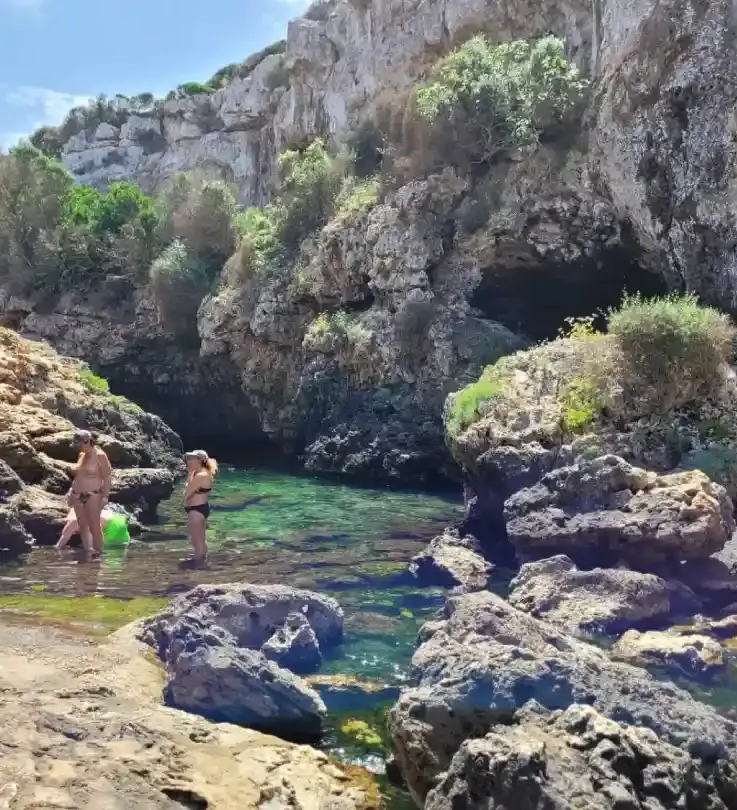
Cala Rafalet is one of the best choices if you enjoy moving slowly over rocky seabeds. There is no large sandy beach here: the entrance is rocky and the bottom is made of slabs and boulders that create small places to explore.
The cove is well protected by the cliffs and woodland around it. Bring water shoes, enter carefully and explore the sides of the bay, where the underwater relief is more interesting. The walk is short, but the final access is rocky and it is not the easiest beach for a buggy or heavy bags.
You can also reach it by kayak from Cala Alcaufar. If you arrive by boat, remember that the bay is narrow and respect bathing areas and sandy anchoring zones.
Ses Olles: fish and rocky platforms in Sant Lluís
Ses Olles, also known as Cala Fondó, is close to Binibeca and is popular with people looking for an easy place to snorkel.
The seabed is rocky near the shore, then changes to sand and posidonia meadows. Flat rock platforms make it easy to sit by the water, and steps help with getting out. Mooring buoys also keep boats away from the bathing area.

It is a good option for beginners and confident children when the sea is calm. Parking is limited, so arriving early is a good idea in summer.
Binidalí: a small cove to explore from the shore
Binidalí is a very small cove in south-east Menorca. Low cliffs surround its narrow entrance, which can offer clear, calm water when the wind is light.
Sand mixes with rocks and posidonia meadows along the bottom. On the sides of the cove you will find small caves and rocky ledges worth exploring slowly, without touching the walls or seabed.

Its small size is also its main drawback. It can fill up quickly in July and August, and there is limited space for towels. Arrive early or choose another time of day if you want to snorkel without crowds.
Pregonda and Cavalleria: snorkelling on the north coast
Menorca’s north coast looks very different from the south. There is more rock, more exposed coastline and more islets, but also interesting seabeds when the sea is calm.
Pregonda Beach is one of the most distinctive spots. Its islets protect parts of the beach and create several places to swim and look below the surface. The beach lies within the Northern Menorca Marine Reserve, so be especially careful: do not collect anything, chase fish or anchor without checking the zoning.
Cavalleria Beach combines sand, rock and small posidonia meadows. It is exposed to Tramontana, so it is not the best choice in a strong northerly wind. With calm water, its sides are very enjoyable for a slow swim with mask and snorkel.
Cala Tirant: a wide beach with varied seabeds
Cala Tirant is a long north-coast beach near Fornells. Because it is more open, the experience depends heavily on wind and waves, but the sides of the bay can offer interesting places when conditions are right.
Avoid snorkelling here if there is current or breaking foam. On calm days, follow the sides of the bay and watch the seabed change between sand, rock and posidonia. It is also a well-known kitesurfing area when the wind arrives, so follow the markers and keep each activity in its own zone.
Cala Morell: snorkelling beneath the cliffs
Cala Morell is a small bay surrounded by honey-coloured limestone cliffs. It is not a large beach, but its rocky platforms and clear water make it an interesting place for a swim and a look along the coast.
You can combine snorkelling with the viewpoints and the Talayotic necropolis nearby. The bay is urbanised, making it a good choice if you want to combine the sea, scenery and history without a long walk.

Punta Prima and the Illa de l’Aire Marine Reserve
Punta Prima is an easy gateway to the protected coast in the south-east. From the beach, you can see Illa de l’Aire and, when the sea is calm, snorkel along the sides of the bay.
The area belongs to the Illa de l’Aire Marine Reserve, together with Biniancolla, Binibeca, Alcaufar and Rafalet. The reserve has rocky seabeds, caves and posidonia, but protection does not mean that the sea is always calm or that every part is suitable for swimming.
If you explore from a boat, check the official map and respect anchoring restrictions. The official posidonia map helps identify sensitive seabeds.

What can you see while snorkelling?
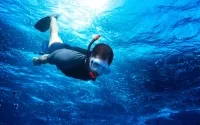
Rocky coves often reveal small fish, moving shoals, sea urchins and different forms of life attached to the seabed. What you see changes with the season, the location and the day’s visibility.
You do not need to chase anything. Keep your distance, swim slowly and avoid stirring up sand with your fins. The best photograph is the one you take without touching anything.
Snorkelling for beginners and children
If it is your first time, start at a beach with an easy entrance, shallow water and calm sea. Es Grau, Punta Prima, Ses Olles and some parts of Cala Galdana can be easier than a remote rocky cove.
Choose a well-fitting mask, try the snorkel close to shore and stay inside the bathing buoys. Children should always be supervised. Snorkelling does not need to become a race to swim furthest: seeing less, but taking your time, is usually better.
What to bring snorkelling in Menorca
- A well-fitting mask and snorkel.
- Fins if you are used to them.
- Water shoes for rocky entrances.
- Reef-conscious sunscreen.
- A bag for taking your rubbish with you.
- Water and food if you are visiting a beach without services.
Do not collect shells, stones or animals. If you see posidonia, leave it where it is: it is an essential marine plant for Menorca’s seabeds and beaches.
When is the best time to snorkel?
Early mornings are often pleasant because there is less movement in the water and fewer swimmers. The most important thing, however, is choosing a coast sheltered from that day’s wind. Our guide to Menorca beaches by wind explains how to choose between the north, south, east and west coasts.
If the sea is rough, there is a current or foam is breaking strongly at the entrance, leave snorkelling for another time. Menorca has many coves: changing beach is part of the plan.
Frequently asked questions
Where can I snorkel in Menorca without a boat?
You can snorkel from the shore at Cala Rafalet, Ses Olles, Binidalí, Pregonda, Cala Morell, Punta Prima and many other coves. Always check the wind and the water entry first.
What is the best cove for snorkelling in Menorca?
Cala Rafalet and Ses Olles are two well-rounded choices because of their rocky seabeds and access. For a protected marine setting, Punta Prima and the coves around Illa de l’Aire are especially interesting.
Can children snorkel in Menorca?
Yes, but choose shallow water, an easy entrance and a calm sea. Es Grau, Punta Prima, Ses Olles and Cala Galdana can be easier than a remote rocky cove.
Can I touch posidonia?
No. Do not pull it up, stand on it unnecessarily or use it as a toy. Posidonia is a protected habitat and part of Menorca’s natural wealth.
Sources consulted
- Balearic Government: Northern Menorca Marine Reserve: zoning and regulated activities.
- Balearic Government: Illa de l’Aire Marine Reserve: boundaries and special diving zone.
- AEMET: marine forecast for Menorca: wind, waves and warnings.
- Official Posidonia map: sensitive seabeds before boating or anchoring.
- Menorca Playas content: beach guides, marine-reserve guides and wind guide.