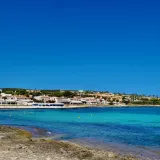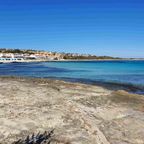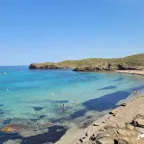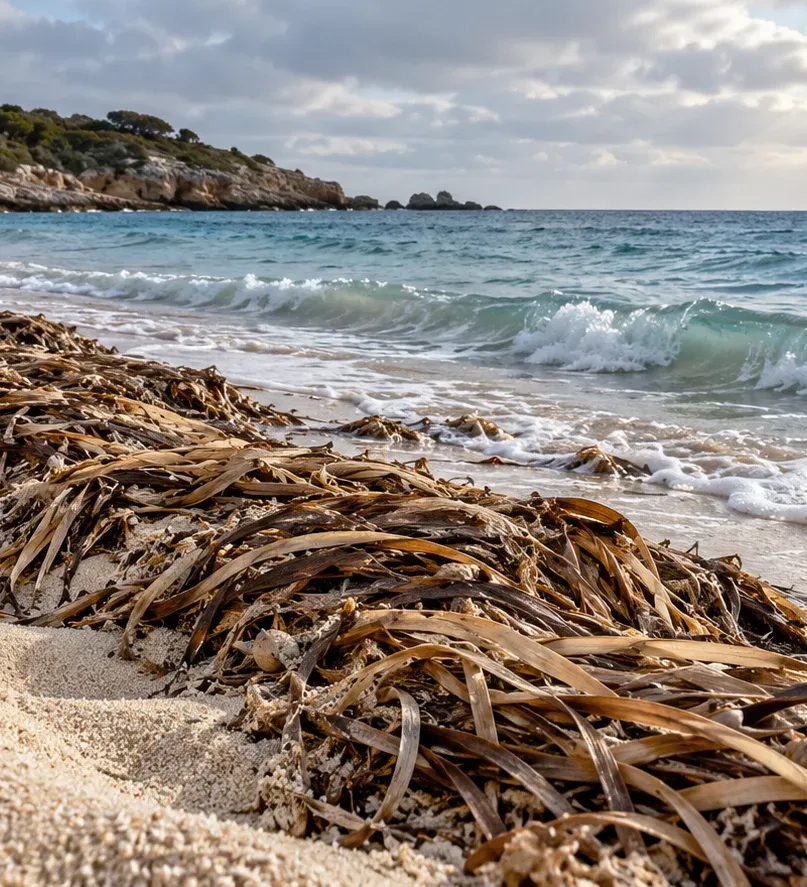











When summer ends, some beaches in Menorca look very different. The sea leaves brown ribbons of vegetation along the shore and successive storms can build them into thick banks or steps beside the water. Although they may look untidy, these remains perform an important job: they help protect beach sand during the rougher months of the year.
That is why washed-up posidonia is left on many Menorcan beaches in winter. It is not neglect or a failure to clean the beach. It allows the coast to retain a natural defence placed there by the Mediterranean itself.
Posidonia is not seaweed
Posidonia oceanica is a marine flowering plant found only in the Mediterranean. It has roots, stems, leaves, flowers and fruit. Beneath the water, it forms meadows that support biodiversity and help stabilise the seabed.
Like other plants, posidonia renews its leaves. Older leaves break away and currents carry them towards the coast. Once they collect on a beach, these deposits are known as wrack beds, or arribazones in Spanish. What lies on the sand is largely natural plant material from nearby meadows, rather than rubbish dumped in the sea.
Spain’s Ministry for Ecological Transition explains that deposits of leaves, roots and stems help stabilise the shoreline and play an important role in preventing coastal erosion.
How washed-up posidonia protects beach sand
Banks along the shoreline form a rough, flexible barrier. Incoming waves do not meet completely exposed sand: they first pass through or strike the plant layer, which dissipates some energy and traps sediment.
Sand also becomes held between the leaves. Removing the whole deposit with heavy machinery can carry that sand away at the same time. When repeated over years, overly aggressive cleaning can alter the beach profile and make it more vulnerable.
This matters most in winter, when there are fewer swimmers and a greater chance of energetic seas. The priority shifts from keeping a clear bathing surface to helping the beach survive until the following season.
Why more posidonia reaches the shore in autumn and winter
The meadows renew their leaves and the sea carries the detached material towards land. Wind, currents and storms decide where it settles and how long it remains. A beach may therefore look almost clear one week and develop a brown band after the weather changes.
The quantity does not in itself mean that the water is dirty. It can indicate that posidonia meadows exist nearby and that natural coastal processes are moving their leaves. The appearance, thickness and position of these banks change naturally.
Is removing washed-up posidonia prohibited?
Management is not identical on every beach. Balearic rules distinguish between natural beaches, serviced natural beaches and urban sections, and impose conditions intended to prevent damage during removal.
The Balearic Decree 25/2018 on the conservation of Posidonia oceanica restricts removal during winter. As a general rule, it cannot take place between 31 October and 15 March on urban beach sections, or between 30 September and 1 May on serviced natural beaches. Removal is also prohibited during a storm or when one is forecast.
Machinery must minimise the loss of sand, stay out of submerged and wet beach zones, and avoid vegetation and dune systems. On eroding natural beaches, the rules give priority to leaving the deposits in place and preserving the banks most exposed to storms.
This is why two beaches may be managed differently. The decision involves more than whether to clean: beach type, condition, season, marine forecast and working method all matter.
Why are some beaches cleared before summer?
Controlled removal may be authorised on urban or heavily serviced beaches to balance conservation with recreational use. A careful operation separates litter, allows trapped sand to escape and avoids sensitive areas.
The material is not always removed permanently. In some cases it is stored and returned before the storm season, particularly where managers aim to restore its protective function. Good management seeks a balance between accessibility, bathing and shoreline conservation.
Posidonia, litter and smell are different issues
Leaving natural wrack does not mean leaving rubbish. Plastics, cans, ropes and other human waste should be removed without indiscriminately taking away the plant material. Separating the two requires more care than scraping off the beach’s entire upper layer.
Odour develops as wet organic matter decomposes. It can be unpleasant, but it is part of a natural process and does not automatically indicate polluted water. A spill, dead wildlife or another unusual sign should be assessed separately and reported to the authorities.
How to visit a beach responsibly in winter
- Walk around the deposits where possible and avoid breaking down the banks.
- Do not take large quantities of posidonia away; its collection and transport are regulated.
- Remove your own litter and do not confuse natural plant material with rubbish.
- Respect dunes, boardwalks and fenced areas, which work with the posidonia to retain sand.
- Remember that a natural beach does not have to resemble a swimming pool or an urban promenade.
Next time you find a line of brown leaves in a cove, consider it part of the beach. The posidonia that seems inconvenient in winter may be helping preserve the sand you will enjoy in summer.
To understand what happens beneath the surface as well, read our report on the damage caused by anchoring on posidonia in Menorca.
Sources consulted
- Spanish Ministry for Ecological Transition: marine flowering plants: ecological role of meadows and washed-up deposits.
- Balearic Government: posidonia documentation: legislation and guidance for managing deposits on beaches.
- Decree 25/2018 on the conservation of Posidonia oceanica in the Balearic Islands: criteria and restrictions for removal.
- Menorca Playas: anchoring on posidonia in Menorca: our related coverage of protecting living meadows.
The cover is an AI-generated illustration of an imaginary Mediterranean beach.